
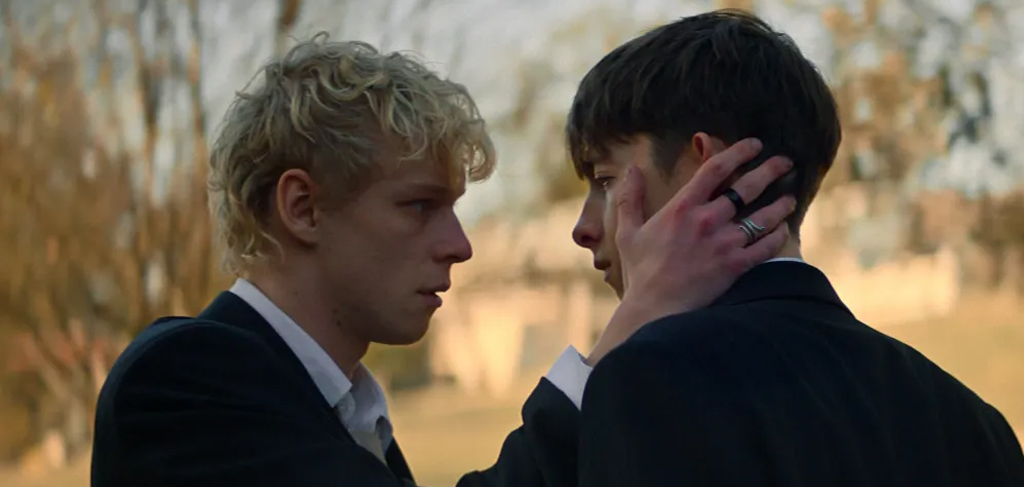
LEVITICUS (2026)
We get it. Leviticus (2026) is a queer horror story. Hear hear. Full stop. It’s but another diversified step for film and a welcome reprieve from the final girl trope, for an hour and a half at least. 2026 has, thus far, been an exciting year for the horror genre and Leviticus has been listed alongside such creative leaps as Obsession (2026) and Backrooms (2026), and from notable sources; and so we assumed we were about to be treated to another unique and horrifying spin. Now, it’s a good movie. It’s well-acted, fairly paced, and though we appreciated its progressive and sympathetic nature, it’s distractingly derivative. If you’ve never seen It Follows (2014), first of all slap yourself, but if you haven’t, you would be forgiven for deeming Leviticus to be originally unexplained and eerie in nature. But the similarities are so blatant, mitigating the freshness of a queer and scary tale. Now we’re not against building on a concept. The It Follows lore of shape-shifting entities is simple and requires no explanation, whereas here it’s a complicated act of churchgoers busing in an exorcist and a ritualized summoning of shape-shifting entities. It’s complicated and we were interested in what the hell it was, especially given the complicity of the adults in the room. The Book of Leviticus is the third book of the Hebrew Bible and the Christian Old Testament and states the rules for holiness. That’s quite the sideline. Will we learn the laws of moral conduct and how they translate here on earth in 2026? No, its just heavy-handed and untethered hints at a metaphor for the danger of religious doctrine, queer lust and attraction, coming out and most of all the isolation and loneliness of the gay teen experience. Warranted, but inclusivity doesn’t grant a pass for corny and superficial. We were disappointed, mostly because we’d wrongly assumed that filmgoers had collectively moved past the era of celebrating for the sake of celebrating. We’re obviously not. We get it, forbidden desire is a lonely and deadly town. But if you’re going to delve into the horror realm, no matter the identity, give us more than a mild plagiarized concept with nothing more than indirect criticisms of religion and society at large. It’s unforgivably horror-phobic.
WATCH OR NOT: NOT
Additional musings: Sorry gays, you deserve better.
Leave a Reply